Bloat in Dogs: A Life-Threatening Emergency
Understanding Bloat: Minutes Matter
Your dog was fine at dinner. Two hours later, they're pacing restlessly, trying to vomit but nothing comes up, and their abdomen looks swollen. This isn't just an upset stomach. This is bloat, and without immediate veterinary intervention, it can be fatal within hours.
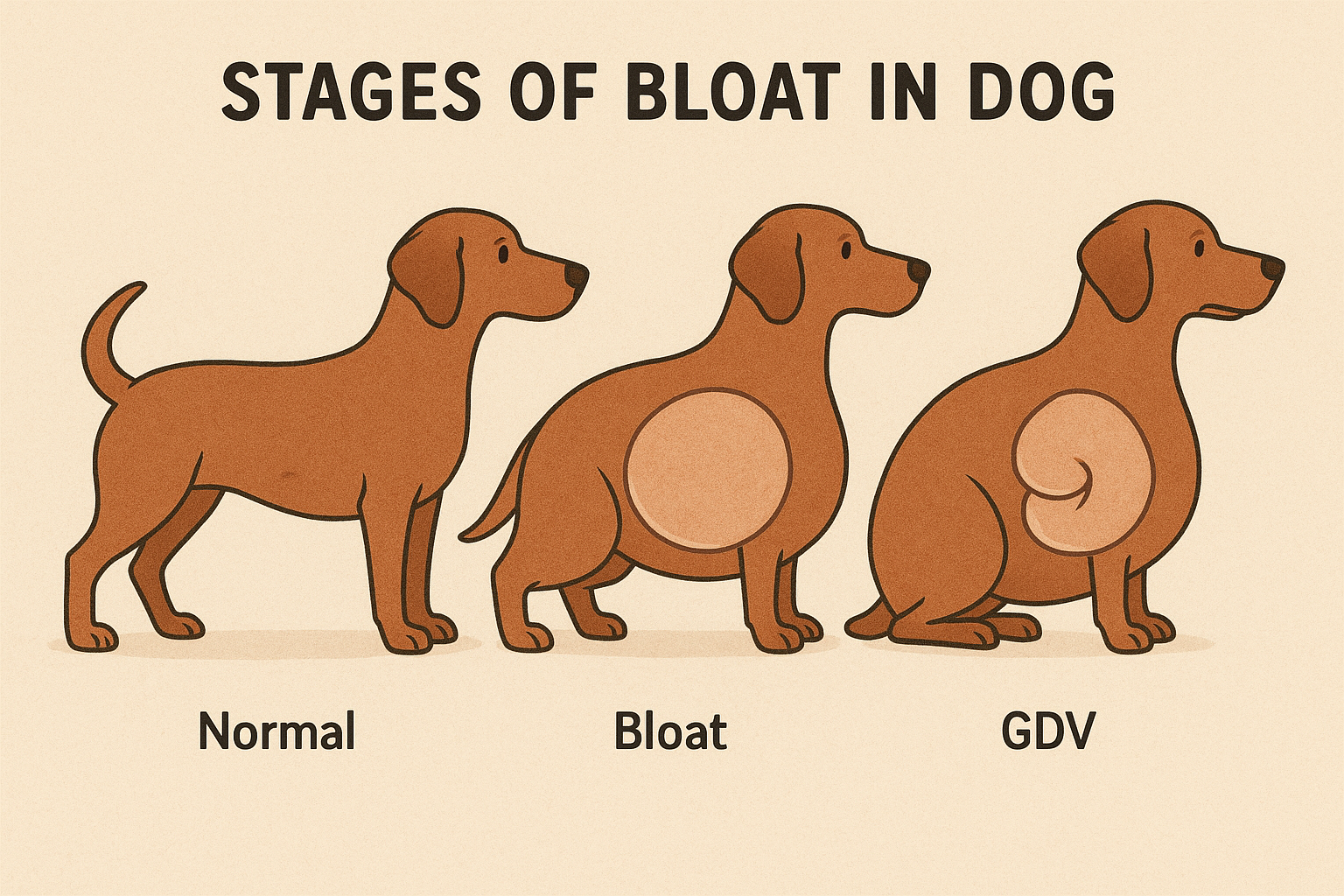
Bloat, medically called gastric dilatation, occurs when a dog's stomach fills with gas, food, or fluid and expands. In severe cases, the stomach twists on itself in a condition called gastric dilatation-volvulus (GDV). This twisting cuts off blood supply to the stomach and other vital organs, creating a rapidly deteriorating medical emergency.
Understanding what bloat is, recognising the warning signs, and acting immediately can save your dog's life.
What Happens During Bloat
When bloat occurs, your dog's stomach begins stretching as gas accumulates. This expansion alone causes severe pain and breathing difficulties as the swollen stomach presses against the diaphragm.
Simple bloat is serious enough, but the condition often progresses to GDV. The distended stomach twists, completely sealing both ends. Gas can't escape through belching or passing into the intestines. Food and fluids are trapped. Blood flow to the stomach wall stops, causing tissue death.
The twisted stomach also compresses major blood vessels that return blood from the lower body to the heart. This creates shock as circulation fails, blood pressure plummets, and organs begin shutting down from lack of oxygen.
The spleen, attached to the stomach, often twists along with it, compounding circulatory problems. Without emergency surgery to untwist the stomach and restore blood flow, dogs with GDV typically die within 2-6 hours of onset.
Recognising Bloat Symptoms Immediately
Early Warning Signs
Restlessness and inability to get comfortable often appears first. Your dog might pace, lie down, get up immediately, try different positions, and seem generally anxious without obvious cause.
Unproductive retching or dry heaving is one of the most distinctive bloat symptoms. Your dog tries desperately to vomit but produces nothing, or occasionally just small amounts of white foam or mucus.
Excessive drooling can accompany retching attempts as saliva accumulates whilst your dog struggles with nausea and discomfort.
Progressive Symptoms
Abdominal distension becomes visible as bloat worsens. The stomach area appears swollen, tight, and drum-like when gently tapped. However, distension might not be obvious in the early stages or in deep-chested dogs where swelling is less visible.
Rapid breathing or difficulty breathing develops as the expanded stomach compresses the diaphragm, preventing normal lung expansion.
Pale or blue gums indicate shock developing as circulation fails. Normal healthy gums appear pink; colour changes signal medical emergencies requiring immediate intervention.
Critical Emergency Signs
Weakness or collapse means your dog is in advanced shock. They may be unable to stand or respond normally to your presence.
Rapid heart rate (tachycardia) occurs as the body desperately tries to compensate for poor circulation. You might feel their heart racing when you place your hand on their chest.
Some dogs adopt a characteristic prayer position, with their front end down and rear end elevated, attempting to relieve pressure and discomfort.
Breeds and Risk Factors
Whilst any dog can develop bloat, certain factors dramatically increase risk.
High-Risk Breeds
Large, deep-chested breeds face the highest bloat risks. Great Danes have approximately 40% lifetime risk of developing GDV. German Shepherds, Standard Poodles, Weimaraners, Irish Setters, Gordon Setters, and Doberman Pinschers all show elevated susceptibility.
Older, larger dogs face higher risks than younger or smaller dogs. Male dogs bloat more frequently than females. Dogs weighing over 45 kilograms have significantly elevated risk compared to smaller breeds.
Lifestyle Risk Factors
Eating habits significantly influence bloat risk. Dogs that eat one large meal daily, consume food rapidly, or drink excessive water after eating face higher risks than dogs fed smaller, more frequent meals.
Exercise immediately after eating represents another major risk factor. The connection between vigorous activity following meals and bloat development is well-documented, though the exact mechanism remains unclear.
Elevated food bowls, once thought to prevent bloat, may actually increase risk according to recent research. Unless your veterinarian specifically recommends raised feeders for medical reasons, standard ground-level bowls appear safer.
Family history matters enormously. If a dog's parents or siblings experienced bloat, their personal risk increases significantly. When selecting puppies from breeders, asking about family bloat history provides valuable risk assessment information.
Dietary Considerations
Dry foods containing oils or fats among the first four ingredients may predispose dogs to GDV, according to veterinary research. The mechanism isn't entirely understood, but dietary fat content appears linked to bloat risk.
Emergency Diagnosis and Treatment
Immediate Veterinary Assessment
When you arrive at our emergency facility with suspected bloat, assessment happens rapidly. We often suspect bloat based on breed, symptoms, and physical examination before any diagnostic tests.
Abdominal palpation reveals the characteristic tight, distended stomach. X-rays confirm diagnosis and determine whether simple bloat or GDV has occurred.
Simple bloat shows a distended, gas-filled stomach on X-rays. GDV presents a distinctive "double bubble" appearance where the twisted stomach creates two gas-filled compartments separated by the twist point.
Blood work assesses overall health status, organ function, and the severity of shock or complications.
Treatment for Simple Bloat
Dogs with bloat that hasn't progressed to GDV receive stabilising treatment including intravenous fluids to combat shock and restore circulation, pain medications to manage severe discomfort, anti-nausea medications if needed, and frequent walking to encourage gas movement through the digestive tract.
Many dogs with simple bloat respond well to medical management within 24-48 hours. However, they require close monitoring as simple bloat can suddenly progress to GDV.
Emergency Surgery for GDV
GDV requires immediate surgery once dogs are stabilised enough to survive anaesthesia. Minutes to hours make the difference between survival and death, though rushing into surgery before stabilisation also risks fatal complications.
Surgery involves decompressing the stomach, untwisting it back to normal position, assessing tissue viability and removing any dead stomach wall segments, checking the spleen for damage and removing it if necessary, and performing gastropexy, permanently stitching the stomach to the body wall to prevent future twisting.
Gastropexy dramatically reduces future GDV risk. Dogs that have experienced GDV without gastropexy have approximately 80% chance of recurrence. After gastropexy, recurrence rates drop to under 5%.
Recovery and Prognosis
Hospital Stay Duration
Simple bloat cases typically require 1-2 days hospitalisation for fluid therapy, monitoring, and gradual return to normal eating.
GDV surgery patients need longer recovery, typically 3-7 days depending on complications and overall health. Extensive stomach damage requiring significant tissue removal, spleen removal, or cardiac complications from prolonged shock all extend hospitalisation.
Home Recovery
Post-surgical care requires 10-14 days of restricted activity whilst incisions heal. Your dog needs pain medications, antibiotics if prescribed, and careful incision monitoring for signs of infection or complications.
Feeding resumes gradually, starting with small, frequent meals of easily digestible food. Normal diet typically resumes within 2-3 weeks post-surgery as healing progresses.
Prevention Strategies That Work
Feeding Management
Feed two or three smaller meals daily rather than one large meal. This reduces stomach distension and associated risks.
Slow down rapid eaters using puzzle feeders, slow-feed bowls with ridges and obstacles, or spreading food across a large flat surface forcing dogs to eat more slowly.
Limit water intake immediately after eating. Provide water access throughout the day but discourage gulping large amounts right after meals.
Activity Restrictions
Wait at least one hour, preferably two, after meals before vigorous exercise, play, or excitement. Gentle walks are generally safe, but running, jumping, or rough play should wait until digestion progresses.
Preventive Surgery
High-risk breed owners should discuss preventive gastropexy with their veterinarian. This procedure can often be performed during routine spay or neuter surgery, permanently reducing GDV risk before it ever occurs.
The procedure isn't risk-free or inexpensive, but for breeds with extremely high GDV risks, preventive gastropexy provides peace of mind and potentially life-saving protection.
When to Seek Emergency Care
Any suspected bloat symptoms warrant immediate veterinary evaluation, regardless of the time of day or night. Emergency facilities exist precisely because conditions like bloat don't wait for convenient business hours.
Don't wait to see if symptoms improve. Don't call in the morning if symptoms start at night. Bloat progresses rapidly, and delay directly correlates with decreased survival probability.
Trust your instincts. If your dog seems wrong, acts distressed, or shows any symptoms mentioned here, seek immediate professional assessment. False alarms are infinitely better than arriving too late to save your dog's life.
Port City Emergency Vets: Here When Seconds Count
When bloat strikes, you need immediate intervention from a facility equipped to handle this critical emergency. We're located in Palmyra, serving Perth's southern suburbs with comprehensive 24-hour emergency veterinary care.
Our experienced team understands that bloat is a true race against time. We're equipped to diagnose GDV, stabilise critically ill dogs, and perform emergency surgery when needed—at any hour of the day or night.
If you suspect bloat in your dog, call Port City Emergency Vets immediately at 08 6185 1726. We're available 24 hours a day, 7 days a week. Don't wait, bloat is an absolute emergency. Visit our contact page for directions and information.
Your quick recognition and immediate action can save your dog's life when bloat strikes. We're here to provide the expert emergency care your pet needs when every minute matters.