Pet Burns: How to Treat and When to Call a Vet
EMERGENCY ACTION PLAN: What to Do Right Now
If your pet has a burn:
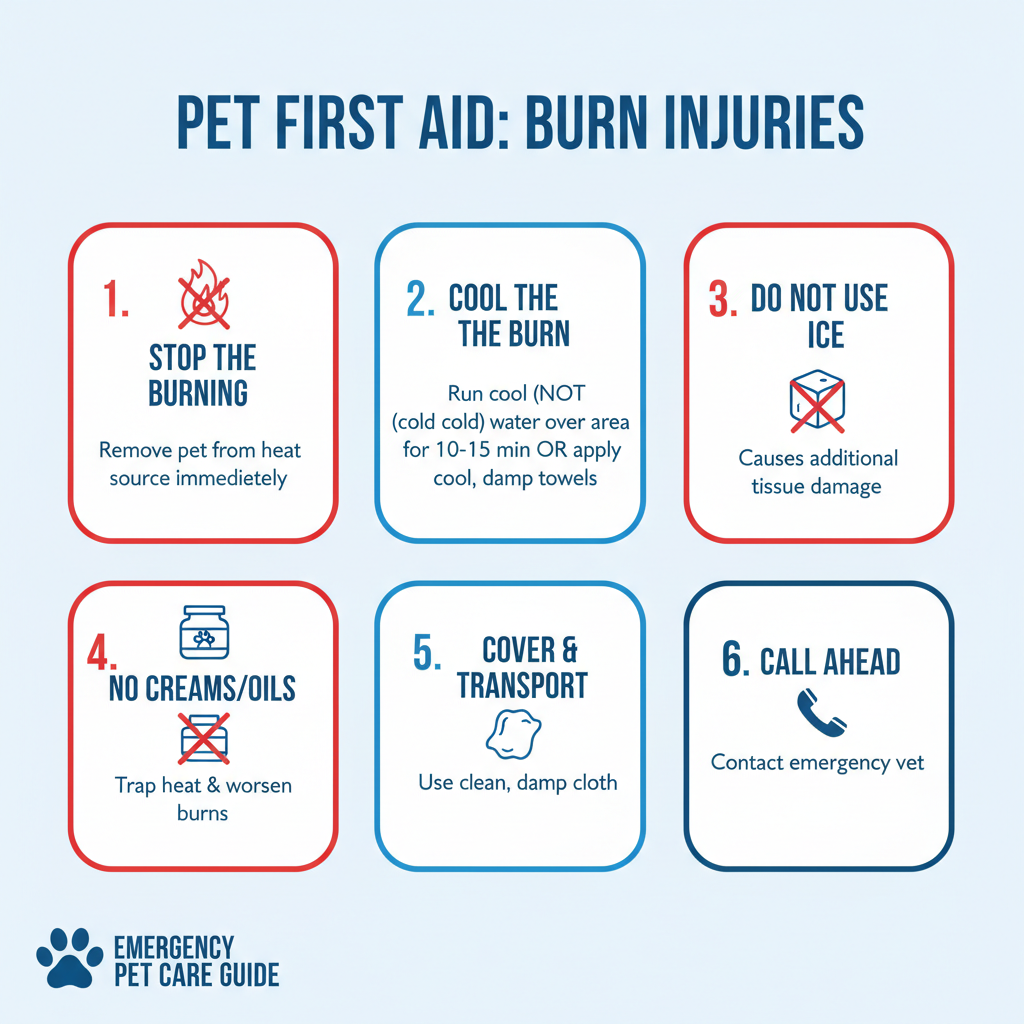
Stop the burning - Remove your pet from heat source immediately
Cool the burn - Run cool (NOT cold) water over the area for 10-15 minutes OR apply cool, damp towels
Do NOT use ice - This causes additional tissue damage
Do NOT apply creams, butter, or oils - These trap heat and worsen burns
Cover with clean, damp cloth - Protect the area during transport
Call ahead - Contact your closest emergency vet
Seek immediate veterinary care if:
Burn covers area larger than your pet's paw
Burn is on face, mouth, paws, or genitals
Skin is charred, white, or peeling
Your pet is in obvious pain or distress
Chemical or electrical burn occurred
You're unsure how severe it is
Burns happen fast. And knowing what to do in those first crucial minutes can mean the difference between a minor injury and serious tissue damage requiring extensive treatment.
Let's talk about how pets get burned, what you can do immediately at home, and when you need to get to an after-hours animal hospital without delay.
How Pets Actually Get Burned
Burns aren't always obvious fire-related accidents. Pets encounter burn hazards constantly around Perth homes.
Thermal Burns - Direct Heat Contact
Hot surfaces cause more burns than people realize. Stovetops. Electric blankets left on high. Heating pads. Metal pet bowls sitting in direct sun on 40-degree days.
Paw pad burns from hot pavement are incredibly common during Perth summers. Asphalt that feels warm to your hand can be 60 degrees or hotter, hot enough to burn skin within seconds.
Scalding - Hot Liquids
Spilled coffee. Boiling water knocked off the stove. Hot oil splatter during cooking. Bath water that's too hot. Even hot soup can cause serious scalding injuries.
Dogs and cats investigating kitchen activity often catch the worst of these accidents. Additionally, small pets can't escape quickly when liquid spills on them.
Chemical Burns
Household cleaners. Drain unblockers. Pool chemicals. Car battery acid. Even some garden products cause chemical burns when they contact skin or get licked off paws.
These burns continue damaging tissue until the chemical is completely removed. Therefore, they often worsen while owners try to figure out what happened.
Electrical Burns
Puppies and kittens chewing electrical cords create mouth burns from electric shock. Moreover, the visible injury is often just the entry and exit points. Internal damage can be severe and not immediately apparent.
Friction Burns
Dogs dragged by leads on concrete. Pets caught in machinery. Road rash from car accidents. These abrasions generate heat that literally burns skin layers off.
First Aid: What to Do at Home
The first 15 minutes after a burn determine how much tissue damage occurs. Quick, correct action reduces severity significantly.
For Thermal and Scald Burns
Cool the area immediately with running cool water for 10 to 15 minutes. Not ice. Not ice water. Cool tap water. This stops the burning process continuing in deeper tissue layers.
If running water isn't practical, use cool, damp towels. Change them frequently as they warm up. The goal is removing heat, not creating cold injury.
Don't apply anything to the burn. No butter. No oils. No aloe vera. No creams. These trap heat and prevent proper assessment when you reach the vet.
Cover the burn with a clean, damp cloth for transport to protect it from contamination.
For Chemical Burns
Flush immediately with large amounts of running water. Don't waste time trying to identify the chemical first. Flush for at least 15 to 20 minutes.
Wear gloves if possible to protect yourself from the chemical. If you can safely remove any contaminated collar or harness, do so.
After flushing, contact an emergency clinic immediately. Bring the chemical container or take a photo of the label if you can do so safely. This helps vets determine specific treatment.
For Electrical Burns
Turn off the power source before touching your pet. If that's impossible, use a non-conductive object like a wooden broom handle to move your pet away from the cord.
Check for breathing and heartbeat. Electrical shock can cause cardiac arrest. If your pet isn't breathing or has no heartbeat, begin CPR if you're trained while someone else drives to the nearest emergency facility.
Even if your pet seems okay after electrical shock, internal injuries can develop hours later. Immediate veterinary examination is essential.
What NOT to Do
Ice or ice water damages tissue further. The extreme cold causes additional injury on top of the burn.
Butter, oils, and ointments seal heat into the burn and contaminate the wound. Vets will need to remove these before treatment, which delays care and increases pain.
Don't try to remove stuck fabric or debris. This pulls off damaged skin and increases injury. Let veterinary staff handle this under appropriate conditions.
Assessing Burn Severity
Burns get classified in degrees based on how deep the damage goes.
First-Degree Burns
Surface level only. Skin appears red. Mildly painful. Think mild sunburn. Hair might be singed but skin isn't blistered or broken.
These often heal with basic first aid. However, large areas still need veterinary assessment to prevent infection and manage pain properly.
Second-Degree Burns
Damage extends into deeper skin layers. Blistering occurs. Skin might appear wet or weepy. Significantly painful. Hair comes out easily from affected areas.
These require veterinary treatment. Infection risk is high. Pain management is essential. Healing takes weeks with proper care.
Third-Degree Burns
Full thickness destruction of skin. Affected area might appear white, charred, or leathery. Ironically often less painful initially because nerve endings are destroyed.
These are medical emergencies requiring immediate intensive care. Skin grafting might be necessary. Infection risk is severe. Without treatment, these can be life-threatening.
When to Get Emergency Care Immediately
Some burns need professional treatment without delay, regardless of how your pet is acting.
Size Matters
Any burn larger than your pet's paw needs veterinary assessment. Large surface area burns create serious complications even if they don't look deep initially. Additionally, they cause fluid loss and shock that require IV treatment.
Location Is Critical
Burns on the face, especially around eyes, nose, or mouth, need immediate care. Swelling can block airways. Eye involvement can cause blindness.
Paw burns affect your pet's ability to walk. Burns on genitals create serious infection risk and urination problems.
Any burn encircling a limb or body part acts like a tourniquet as swelling develops. This cuts off circulation and becomes life-threatening quickly.
Type of Burn
All chemical burns warrant emergency care because the chemical continues damaging tissue until neutralized. Furthermore, many chemicals cause internal damage if ingested while your pet licks the affected area.
Every electrical burn needs immediate examination. Visible mouth burns indicate your pet received significant shock that might have damaged heart, lungs, or other organs invisibly.
Signs Your Pet Needs Urgent Care
Difficulty breathing. Shock symptoms like pale gums, weakness, rapid heartbeat. Extreme pain that doesn't respond to cooling. Burns that continue spreading or deepening despite first aid.
Moreover, if you're uncertain about severity, err on the side of caution. Burns can look minor initially then worsen over hours as deeper tissue damage becomes apparent.
What Happens at the Emergency Clinic
When you arrive at Port City Emergency Vets in Palmyra, the team immediately assesses burn severity and your pet's overall condition.
Initial Stabilization
For pets in shock, IV fluids begin immediately. Pain relief is a priority - burns are incredibly painful and adequate analgesia is essential.
If breathing is compromised from facial swelling or smoke inhalation, oxygen therapy starts right away.
Wound Assessment and Treatment
Vets thoroughly clean the burn area to assess damage accurately and remove contaminants. Sometimes sedation is necessary to do this properly without causing additional pain.
Second and third-degree burns get sterile dressings. These protect from infection while promoting healing. Bandages need changing every 24 to 48 hours initially.
Ongoing Care
Many burn patients need hospitalization for several days. IV fluids, pain management, antibiotics to prevent infection, and regular bandage changes are standard.
Severe burns might require skin grafts or plastic surgery once initial healing stabilizes the patient. This happens days or weeks after the initial injury.
Home Care Instructions
For burns safe to treat at home after initial assessment, you'll receive detailed instructions. Bandage care. Medication schedules. Signs of infection or complications to watch for.
Follow-up appointments ensure healing progresses properly. Burns can develop complications days after injury, so monitoring is crucial.
Prevention: Keeping Your Pet Safe
Most pet burns are preventable with simple awareness and precautions.
In the Kitchen
Use back burners when cooking. Turn pot handles inward where curious noses can't reach them. Never leave hot items unattended at pet level.
Keep pets out of the kitchen during cooking. Baby gates work brilliantly for this.
Around the Home
Test bath water temperature before bathing pets. Secure electrical cords and cover outlets. Store chemicals in locked cabinets.
Keep pets away from fireplaces, candles, and space heaters. Use guards or barriers to create safe distances.
Outside in Perth's Heat
Test pavement temperature with your hand. If it's too hot to hold your hand on for seven seconds, it's too hot for paw pads.
Walk dogs early morning or late evening during summer. Stick to grass where possible. Consider protective booties for dogs that must walk on hot surfaces.
Never leave pets in cars, even with windows cracked. Temperatures soar within minutes, causing heat stress and thermal burns.
Port City Emergency Vets Is Here Around the Clock
Burns don't respect business hours. They happen at 2am. During long weekends. Sometimes when you least expect it.
Port City Emergency Vets operates every hour of every day at our Palmyra location on Canning Highway. Our fully equipped facility includes everything needed to treat burn emergencies properly. Digital radiology, in-house blood work, ICU capabilities, and surgical facilities.
Our experienced team understands that burn emergencies are frightening. We'll guide you through what to do over the phone if you call before coming in. When you arrive, we'll assess your pet immediately and provide the urgent care they need.
If you're facing a pet burn emergency right now, call us on 08 6185 1726 while you're en route. We'll prepare for your arrival and talk you through transport considerations.
Because when burns happen, every minute matters. And having experienced emergency veterinary care available makes all the difference to your pet's recovery.